
"Being a writer and a woman, I look at everything with words. I am listening to a baby's cry and trying to turn a phrase in my mind to describe it. I am perhaps laboring on the delivery table and in between the actual bearing down and the twisting I might make in pain, I am looking for words to describe that pain, that bearing down, the actual labor."
- Estrella Alfon, Her life in her own words 1Welcome.

Readers, teachers, and learners of Philippine Literature, welcome to
Of Women, A Mother, and A Servant: An online learning module on Estrella Alfon.
In its current state, the Philippine literary canon (as is also the case with most, if not all, literary canons around the world) is highly patriarchal–composed primarily of highly discussed and often anthologized works of male Filipino authors who have stood the test of time. This poses the need for scholars, teachers, and students of literature to problematize our literary canon; if this is the collection of works that is supposed to embody not just the intellectual and literary prowess and excellence of Filipino writers but also the lives and experiences of Filipinos that are culturally, socially, and politically significant, should it not be more representative of who we are? How can a literary canon be a genuine representation of who we are as a people–our values and capabilities–if it deliberately excludes works of literature that are written by authors, for and about, the experiences of people that have historically been marginalized and silenced within a patriarchal society? The tendency of the literary canon to exclude valuable works, specifically by female writers, limits the exposure of the Filipino readership to these works. Furthermore, it limits the exposure of Filipino students to the works of writers that could otherwise enrich and open their minds to stories and perspectives that go beyond what they could imagine (both the creators of this module can attest to this). This module was created with this issue in mind. The creators of this module are united in the belief that Filipino students would benefit from reading and analyzing works written by Filipino women writers, especially works that tackle issues that are of importance but have been deemed either too taboo or too personal/intimate (hence, sociopolitically insignificant) to be discussed. One of the writers who exemplify such works is Estrella D. Alfon and this module was designed for the purpose of bringing Estrella Alfon and three of her short stories, “Fairy Tale for the City,” “Magnificence,” and “Servant Girl” into the classrooms so that both teachers and students may benefit from the power and brilliance of her words.

CONTENTS

ESTRELLA D. ALFON
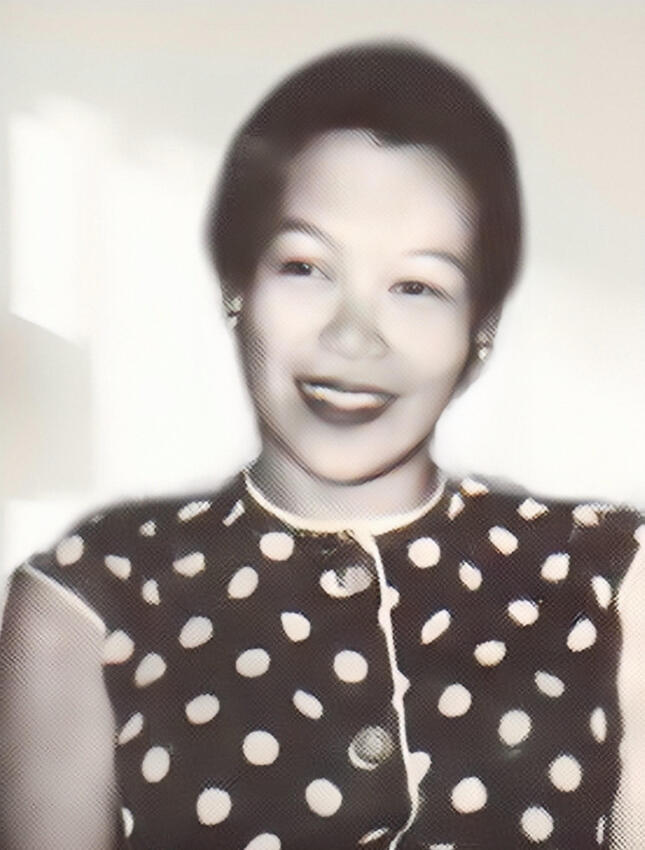
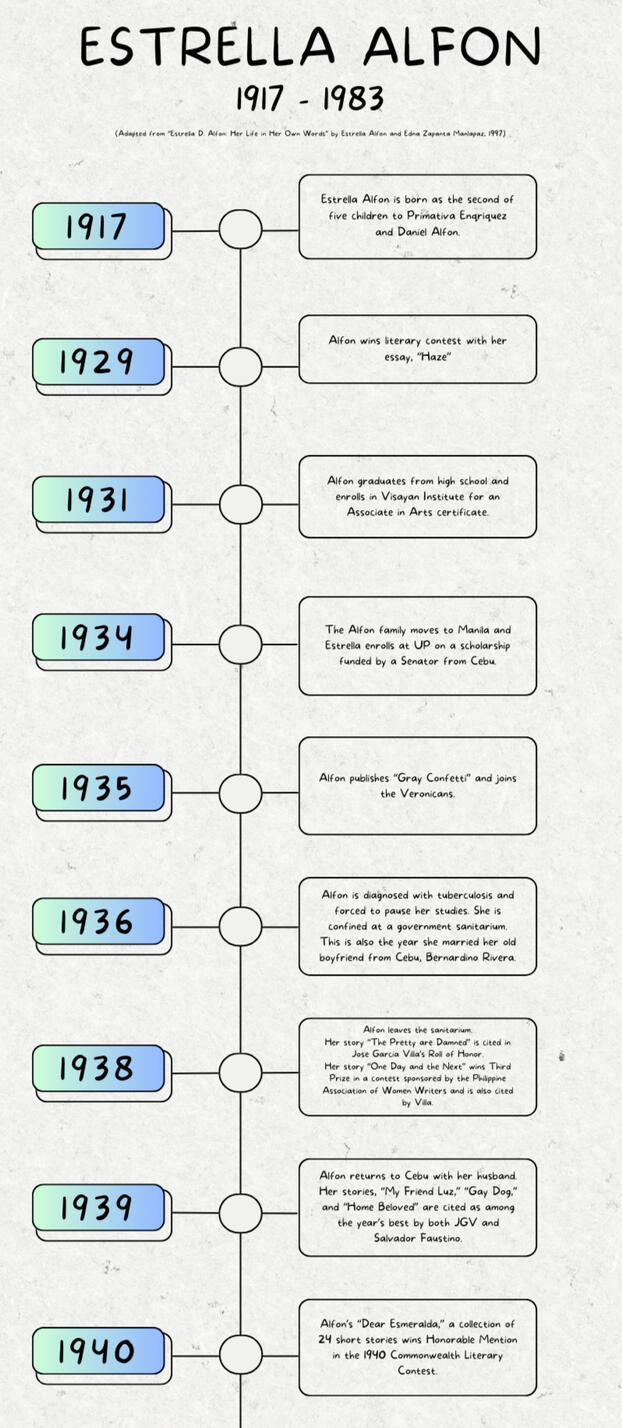
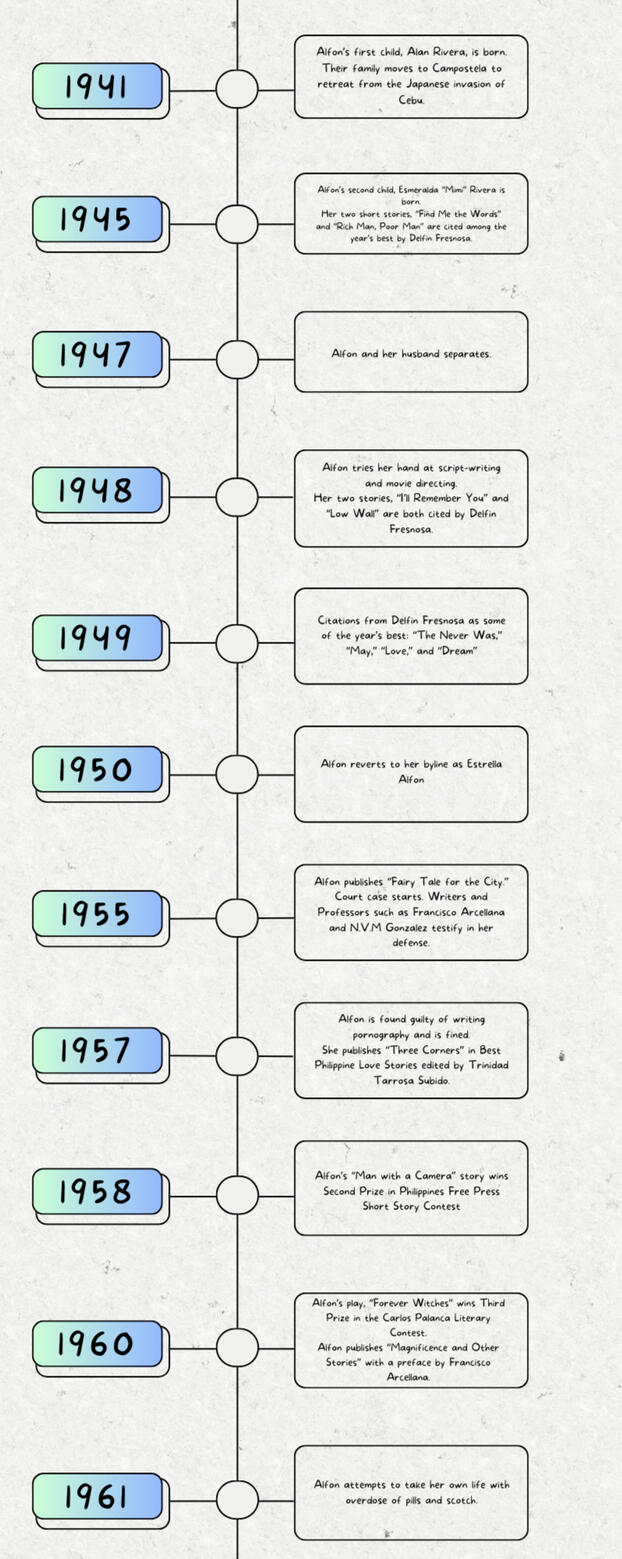
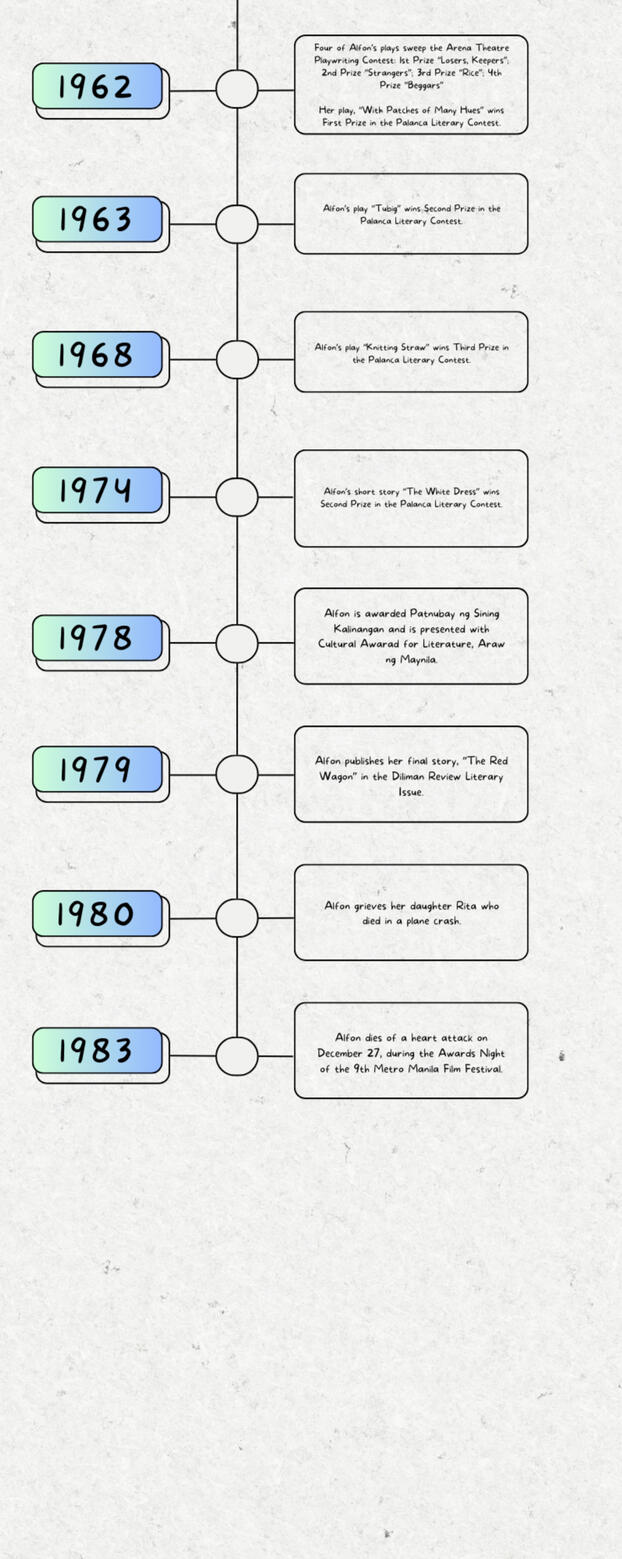
Born in San Nicolas, Cebu on May 27, 1917, Estrella Alfon has undoubtedly made her mark as one of the most remarkable writers of Philippine literature in English. Professor Thelma Arambulo asserts that Alfon “holds center stage when one talks of Cebu women writers,” and that she has “asserted herself in a field where even the finest of women writers tend to be underrated and simply outnumbered.”6 Alfon started her writing career by submitting short story entries to a writing contest conducted by Alfredo Elfren Litiatco for the Graphic Weekly Magazine.5 In 1929, at the age of 12, she won her first literary award with a 200-word essay entitled “Haze.”1 She moved to Manila with her family in 1934 and enrolled at the University of the Philippines for a pre-med course where she became part of the U.P. Writer’s Club that held their meetings in the home of Manuel and Lydia Arguilla. In 1935, she published her first short story in Graphic Magazine entitled, “Gray Confetti,” and joined the literary group who dubbed themselves as the Veronicans. The Veronicans consisted of thirteen students who were “very young, keening to life, [and] bursting with the need to write.”1 This group included the likes of Francisco Arcellana, Delfin Fresnosa, Hernando R. Ocampo, and N.V.M. Gonzalez, with Alfon being the only female member. In 1948, Alfon tried her hand at script-writing and movie-directing. In 1955, Alfon published the short story, “Fairy Tale for the City.” Shortly thereafter, it was sued in court by the Manila Catholic Women’s League because they found it obscene and immoral, and in 1957, Alfon was found guilty of writing pornography and was subsequently fined. This trial had a significant impact on Alfon’s writing career, with publishers even blacklisting her. According to Alfon herself, “[...] after all the bad publicity I couldn’t get a story out. Just to ready my name was enough for these editors whose wives were in the Catholic Women’s League to reject my manuscripts. Another story by Estrella Alfon. Dirty na naman!”1 In 1960, Alfon published a collection of short stories including “Magnificence” and “Servant Girl” in an anthology entitled, “Magnificence and Other Stories” and a play entitled, “Forever Witches.” In 1979, Alfon published her final story, “The Red Wagon” and in 1983, at the age of 66, Estrella Alfon died of a heart attack during the Awards Night of the 9th Metro Manila Film Festival. Despite not having any formal training when it comes to writing and despite the hurdles that came with being one of the only few women in a field dominated by men, Alfon still chose to spend her entire career writing unapologetically about subject matters anchored to the experiences that cannot be divorced from being a woman and a human.5

SYNOPSES